
Are you looking to enhance your home cinema experience to the next level? Look no further than a 5.1 Channel Home Theater Receiver – your gateway to immersive surround sound that will leave you captivated.

10 Best Bluetooth Receivers for Stereos 2024 - Singersroom.com - Source singersroom.com
Editor's Notes: Know why "5.1 Channel Home Theater Receiver: Immersive Surround Sound For Your Home Cinema" has published today? Because it's packed with information that is worth reading.
After analyzing, digging, and comparing, we've put together this easy-to-follow guide to aid you in your decision-making process when it comes to selecting the perfect 5.1-channel home theater receiver for an immersive cinematic experience at home.
| Key Factors | Key Differences/Takeaways |
|---|---|
| Number of Channels | 5.1-channel configuration for immersive surround sound |
| Connectivity | HDMI, optical, and coaxial inputs for various audio sources |
| Sound Quality | High-fidelity audio output with Dolby Digital and DTS decoding |
| Ease of Use | User-friendly interface and remote control for seamless operation |
Transitioning to the main article topics...
FAQ: 5.1 Channel Home Theater Receiver for Immersive Surround Sound
For those seeking an unparalleled cinematic experience at home, a 5.1 channel home theater receiver is a foundational component. Here we address frequently asked questions to provide clarity and empower informed decision-making.
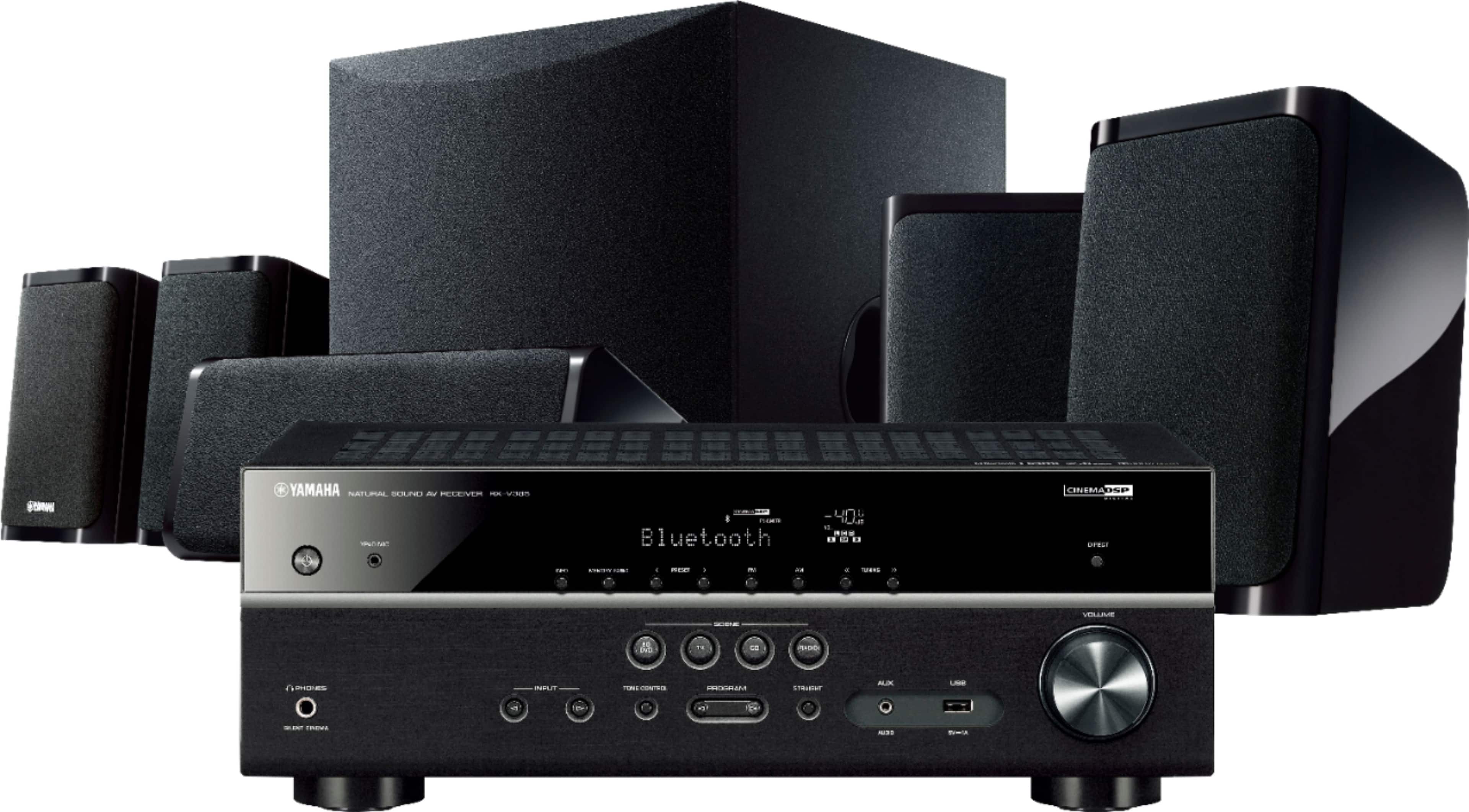
Customer Reviews: Yamaha 5.1-Channel 4K Home Theater Speaker System - Source www.bestbuy.com
Question 1: How does a 5.1 channel home theater receiver enhance sound quality?
It achieves this by distributing audio signals to five distinct channels: left, center, right, left surround, and right surround, along with a dedicated subwoofer channel. This configuration expands the soundstage, creating a more immersive and realistic surround sound experience.
Question 2: What type of speakers are compatible with a 5.1 channel receiver?
To fully utilize the 5.1 channel capability, speakers with a passive design (requiring external amplification) are recommended. These speakers should be rated to handle the power output of the receiver and have impedance within the specified range.
Question 3: How is a 5.1 channel receiver connected to other components?
Typically, the receiver serves as the central hub, connecting to a source (e.g., Blu-ray player, streaming device) via HDMI or optical inputs. It then transmits audio and video signals to the connected speakers and displays.
Question 4: What advantages do 5.1 channel receivers offer compared to soundbars?
While soundbars provide a convenient and compact audio solution, 5.1 channel receivers offer greater flexibility and customization options. They allow for the positioning of speakers to optimize the soundstage and better suit the room acoustics.
Question 5: Are 5.1 channel receivers compatible with home automation systems?
Many modern 5.1 channel receivers feature integration with home automation systems, enabling control via smart home assistants, mobile apps, or dedicated remotes. This adds convenience and seamless integration into a broader smart home ecosystem.
Question 6: What factors should be considered when choosing a 5.1 channel home theater receiver?
Key considerations include the availability of desired features (e.g., HDMI inputs, Bluetooth connectivity), power output, compatibility with existing speakers, and budget. Careful assessment of these factors ensures an informed choice that meets specific audio requirements.
By addressing these common questions, we aim to provide a comprehensive understanding of 5.1 channel home theater receivers and their role in elevating the home cinema experience.
(Transition to Next Section)
Tips
After selecting a 5.1 Channel Home Theater Receiver: Immersive Surround Sound For Your Home Cinema, you must be keen on making the best out of it. Here are a few tips to help you achieve an immersive surround sound experience in your home cinema:
Tip 1: Calibrate Your Speakers
Proper speaker calibration is crucial for achieving an optimal sound experience. Use the receiver's built-in calibration tools or a dedicated calibration microphone to adjust the volume, distance, and other settings of each speaker. This ensures that all speakers are producing sound at the same level and that the soundstage is correctly centered.
Tip 2: Choose the Right Surround Sound Mode
Different surround sound modes are designed for specific types of content. Experiment with different modes, such as Dolby Atmos, DTS:X, or THX, to find the one that best suits your listening preferences and the content you're watching.
Tip 3: Position Your Speakers Correctly
The placement of your speakers has a significant impact on the surround sound experience. Front left and right speakers should be placed at ear level, while the center speaker should be directly below the TV. Surround speakers should be placed behind the listening position slightly above ear level and angled towards the center. Refer to the receiver's manual or speaker manufacturer's recommendations for optimal placement.
Tip 4: Use Quality Speaker Wire
Using high-quality speaker wire is essential for maintaining signal integrity and minimizing sound degradation. Choose wires with a low resistance and thick gauge to ensure that your speakers receive sufficient power.
Tip 5: Experiment with Room Acoustics
The acoustics of your room can affect the sound quality of your home theater system. Consider adding sound-absorbing materials, such as curtains or rugs, to reduce unwanted reflections and improve clarity.
By following these tips, you can optimize your 5.1-channel home theater receiver and unlock an immersive surround sound experience that will enhance your home cinema viewing.